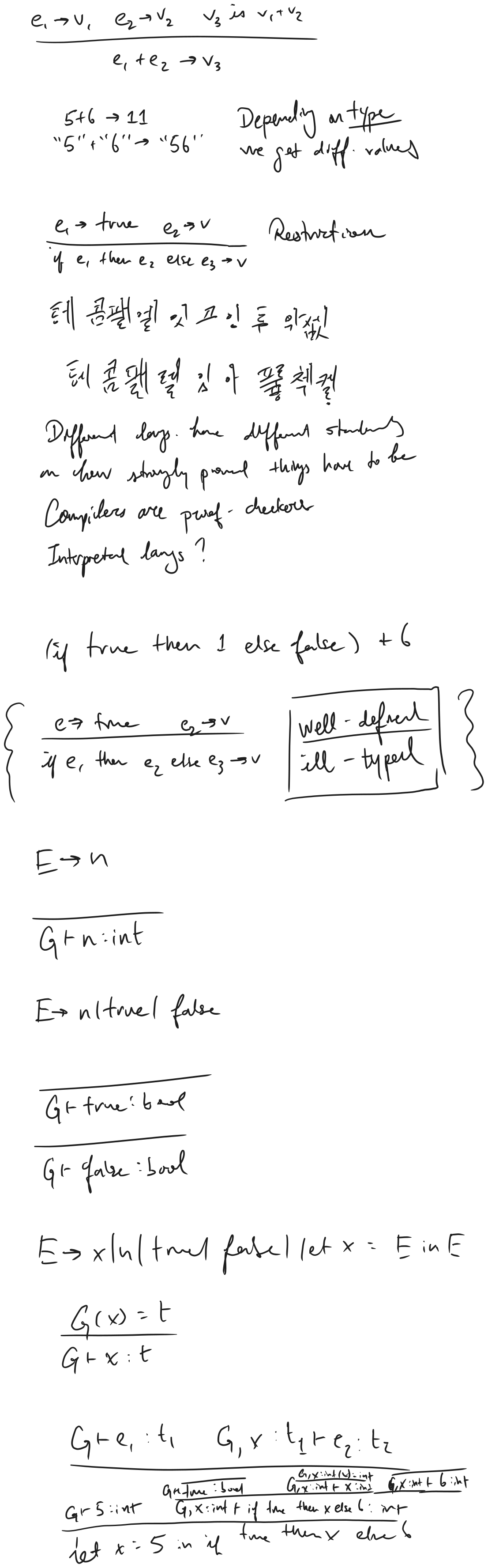
Typing
- Type System: Rules that dictate a type to a construct
- Type: A categorization, a classification or set (ultimately an ontological problem)
- Examples for PL: int, float, bool, function
- Construct: A meaningful thing
Type systems give meaning to constructs (ultimately bits) They tell us two things:
- What type is _
- What can we do with type _
Type systems can be sound, complete, or decidable, but never all 3
- Complete and decidable
- Sound and decidable Sound: All bad programs (ill-defined, unexplainable behavior) will be rejected Complete: All good programs will be accepted Decidable: Able to check all programs
Think about precision and recall in data science!!!! Same concept!!!
The most sound compiler rejects every single program The most complete compiler accepts every single program
To what extent can the type system enforce? Thing can be well-typed (accepted by the type system) but still be ill-defined
- example: C
char buff[4];
buff[x];

// if x >= 4, error
C’s type system only says x has to be an int
Type safe languages enforce, type-unsafe do not Type safe: well-typed well-defined
Type Checking
Type systems are rules Applying the rules: type checking Can do this at compile time: static type checking Can do this at run time: dynamic type checking (Java polymorphism)
A type checker needs a rule of what type an expression is
Like Opsem but instead of ,